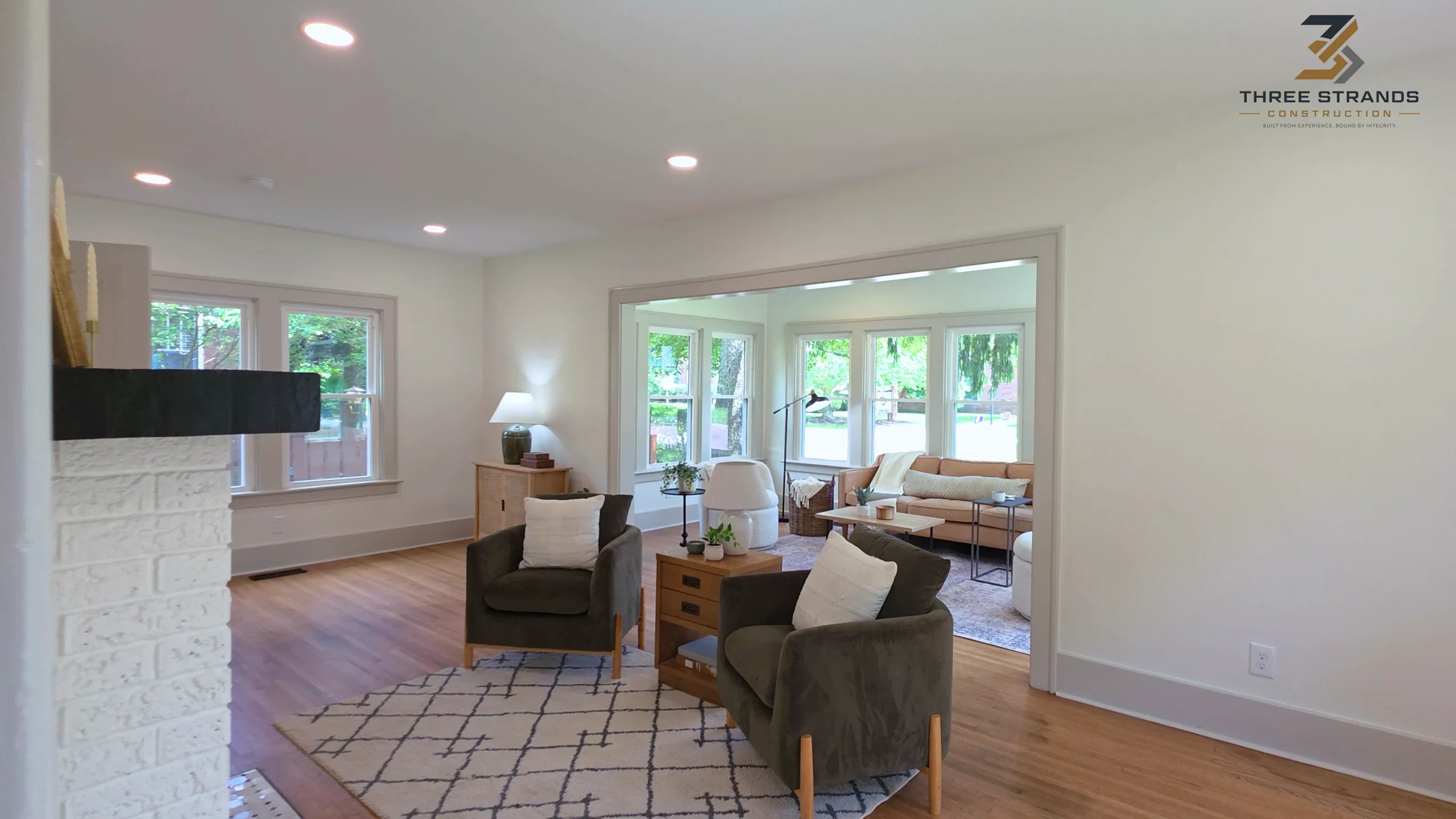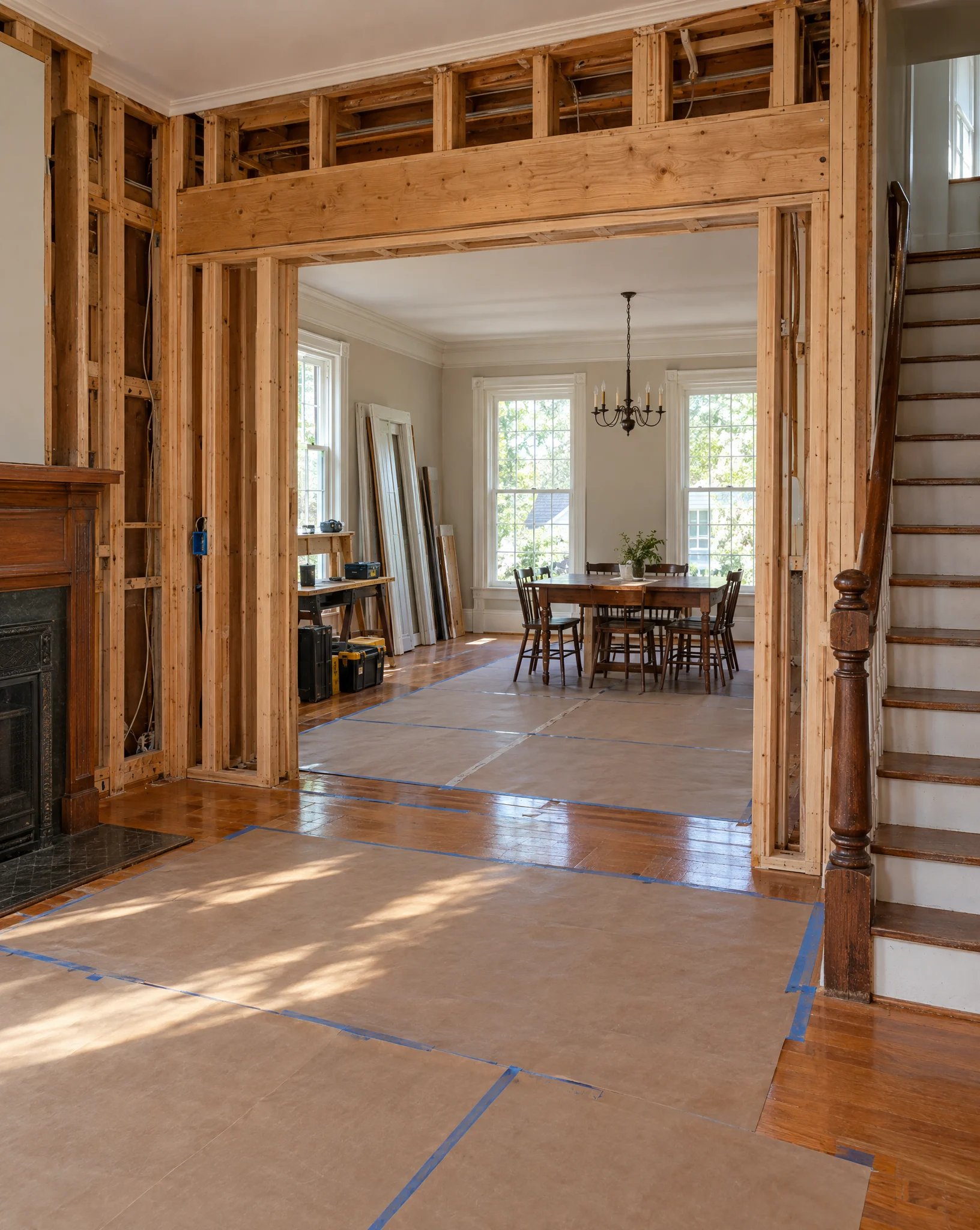
A whole house remodel can transform an older home or a house that no longer fits how you live. It's also a big project. Understanding the usual order of work helps you plan your budget, your schedule and where you'll live during construction.
Start with a full picture of the house
Before design, look at the whole home: foundation, framing, roof, windows, plumbing, electrical, heating and cooling, and insulation. Problems in these systems are easier and less expensive to fix while walls and floors are open. A clear picture also helps you decide what to change and what to keep.
Plan the whole house, even if you build in stages
Some families renovate everything at once. Others work in phases over time. Either way, a plan for the whole house helps each phase fit the next. For example, if a kitchen is coming later, it helps to run plumbing and electrical for it during an earlier phase.
The usual order of work
While every project is different, most whole house remodels follow a similar sequence:
- Protection and demolition: protect areas that stay, then remove what's being replaced.
- Structural work: foundation repairs, new beams, openings or framing changes.
- Exterior envelope: roof, windows and siding, so the house is weather-tight.
- Rough-ins: new plumbing, electrical and heating and cooling run through open walls.
- Inspections: required inspections happen before walls are closed.
- Insulation and drywall: walls and ceilings are insulated and closed up.
- Finishes: flooring, cabinets, trim, tile, paint and fixtures.
Older homes need testing
Homes built before 1978 may have lead-based paint, and older building materials can contain asbestos. Testing suspicious materials before they're disturbed protects your family and the crew, and it affects how the work is done.
Decide where you'll live
Some homeowners stay in part of the house while work happens in phases. Others move out for the most disruptive stages, such as when the kitchen, bathrooms or utilities are out of service. Dust, noise and access all play a part in that choice.
Make decisions early
Choosing fixtures, finishes and appliances before construction starts helps keep the schedule on track. Late changes can mean reordering materials or redoing work that's already done.
Read more about whole house remodeling.