
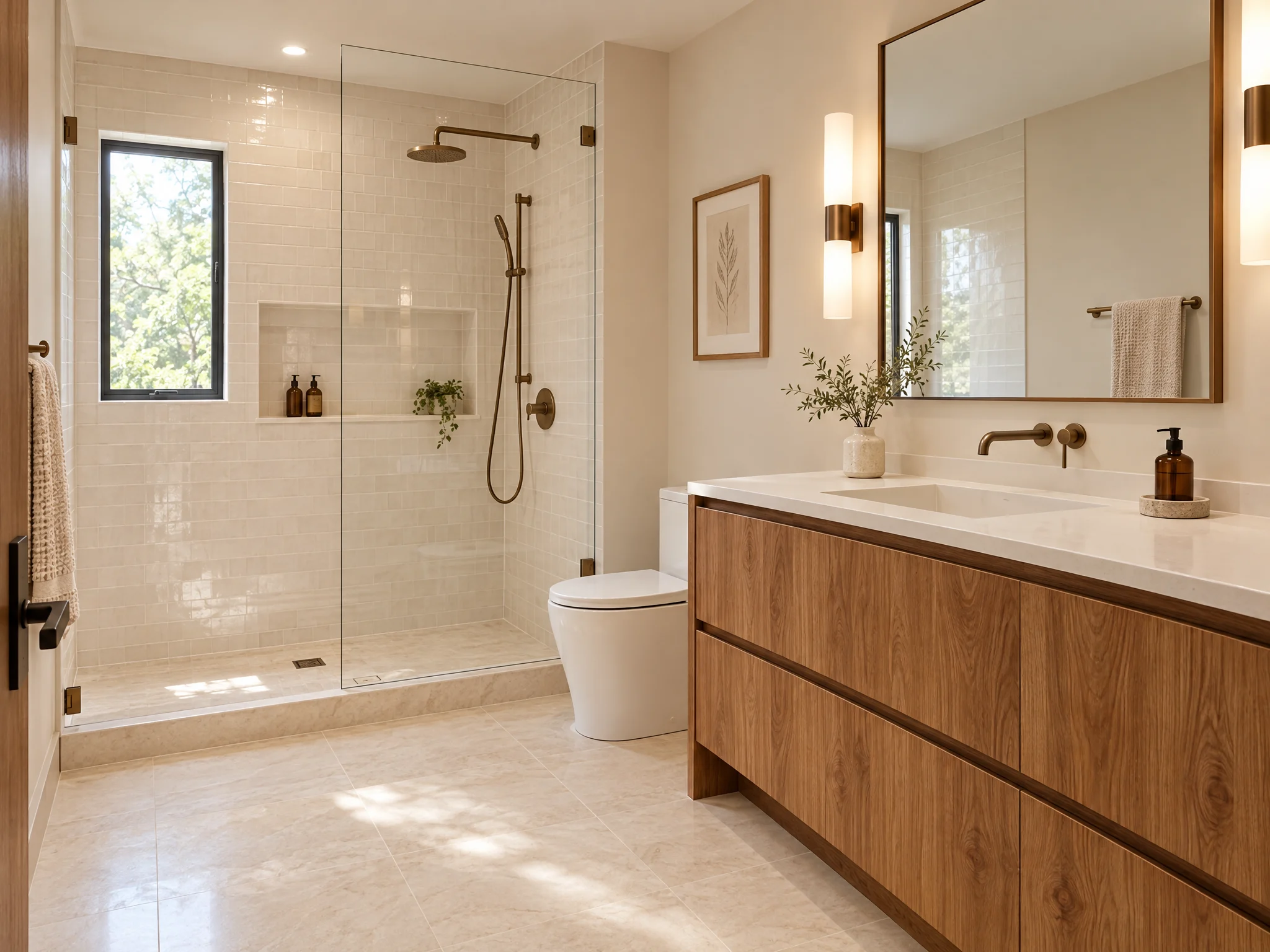
Bathroom remodels are usually planned around what you see: tile, vanity, fixtures and lighting. But the parts you won't see after the walls close up decide how well the room holds up.
Waterproofing comes first
Tile and grout are not waterproof on their own. Water can pass through grout lines and soak the wall or floor behind them. A shower needs a waterproof layer behind the tile and a properly sloped pan that sends water to the drain. When this step is done right, the finished shower can last for many years. When it's skipped, damage can stay hidden until it's serious.
Ventilation protects the whole room
Bathrooms create a lot of moisture. An exhaust fan that vents to the outside, not into the attic, removes humid air before it can cause mold, peeling paint or damage. Size the fan for the room and place it where it pulls steam from the shower.
Plumbing decisions
Moving a toilet, shower or vanity changes the plumbing beneath the floor or in the walls. That can be very doable, but it's worth deciding early. A remodel is also a good time to replace old supply lines and shut-off valves while the walls are open.
Electrical and lighting
Bathroom outlets need ground-fault protection. Plan where you need outlets for hair dryers, toothbrushes or a heated mirror. Good lighting at the mirror, without harsh shadows, makes daily routines easier.
Plan for accessibility, even if you don't need it yet
A few choices during a remodel can make a bathroom easier to use for years:
- A curbless or low-threshold shower
- Blocking in the walls so grab bars can be added later
- A handheld shower head
- Slip-resistant flooring
Choose finishes that suit the space
Large-format tile means fewer grout lines to clean. Matte finishes can hide water spots. A vanity with drawers often holds more than one with doors.
Older homes
In older homes, opening walls can reveal outdated wiring, old plumbing or past water damage. Planning for some unknowns keeps a surprise from stopping the project. If your home was built before 1978, work that disturbs painted surfaces should follow lead-safe practices.
See how we approach kitchen and bath remodeling.


